Uncertainty Isn't a Phase: Why We Live in the In-Between More Than We Think
Jessica Paschke, Transformation Coach
Nobody prepares us for how much uncertainty we'll feel as an adult.
Or how much of our lives will feel like we have no idea what we're doing or where we're going.
I was going down a rabbit hole about this in my morning writing pages a few weeks ago. Some prompt had got me wondering about when all of the change and uncertainty in my life really kicked off. Was there a time I could point to and say: "Yes! This is where it began"? (I was pretty certain it was 2020 and the pandemic.) So instead of writing, I decided to brain dump a change timeline.
Working backwards, I started listing the changes that either left a big impression or changed something fundamental about how I moved through the world.
2024, 2022, 2021, 2020. Surprise, surprise – it was not a Covid kick off. The list kept going. 2018, 2015, 2012, 2010.
I got all the way back to 2001 – when I graduated from college and moved to New York City – and I gave up. There wasn't a single year in over twenty-five years where something didn't shift in a big way.
I was moving constantly. Starting over in new places without knowing anyone. Not knowing where we'd go next. Leaving careers. Starting a business. Birth. Losses. Illness. Change after change after change. Some by choice. Many not.
There was never "not change."
And I don't believe for a second that I'm the only one.
Studies have shown that for every major life disruption, it can take us five years to get upright again. With an average of 3-5 of these lifequakes happening per lifetime, we spend about 15-25 years in the in-between. And that study was done pre-Covid.
Now, I've always thought change and the in-between were more common than what we think, but sitting there with my list staring me in the face was a bit of a rude awakening.
My timeline – and those studies – made two things very clear:
Uncertainty isn't a phase. It's not an anomaly. It's the norm.
And we live in uncertainty more than we don't.
But unfortunately, that's not how it's talked about. Uncertainty is still thought of as something temporary. We refer to it as a rough patch. Like the majority of life happens in certainty and uncertainty is just the occasional glitch in the system.
But treating it like it's a problem to solve is causing more harm than we realize.
Every time we reach for tools to try and control it – better plans, clearer goals, tighter systems – we're assuming the problem is insufficient structure. But you can't control the world. There are too many factors, too much change.
No plan survives uncertainty intact because that's the nature of the terrain. Trying to control uncertainty doesn't reduce it. It just exhausts you.
When we attempt to reframe it with gratitude, mindset, and resilience, we're assuming that if we just think about it differently it will stop bothering us.
But you can't think your way out of something your whole body is experiencing. Slapping a new label on something doesn't mean your mind and body go along with it. Gratitude helps. Perspective helps. But you can't bypass what you're actually feeling and call it growth.
And when we decide the only solution is to surrender to it – trust the process, divine timing, just let it go – we're assuming trust is built by stopping trying to understand. It isn't.
Trust is built slowly, through experience and practice. And when things don't work out, surrendering to divine timing puts the responsibility quietly back on you, as if you weren't aligned enough. We give way too much credit to alignment and not enough to the reality that sometimes things just happen.
None of these approaches are wrong. But they won’t work the way you need them to because every single one of them makes the assumption that certainty needs to be the goal, the endpoint. Like there's some cosmic timeline we're supposed to be following and uncertainty keeps getting in the way.
And when the uncertainty doesn't resolve we feel like we're falling behind or we did something wrong.
But we're trying to solve something that isn't broken. Uncertainty is part of life. It's not the problem.
And when we finally break free of those expectations, we also let go of self-judgment around how we're doing in life – giving us more space, self-compassion, and room to breathe. We're able to slow the spiral down and get curious about what's happening around us and how we want to respond to it.
We realize that our power was never waiting on the other side of uncertainty.
It was here all the time. Right in the middle of it.
So what does actually help?
If we're going to spend this much of our lives in uncertainty, we need a different orientation entirely. Not tools designed to fix it or fast forward through it, but ways of moving that actually work in this landscape.
Get clear on what matters now. Not what mattered before. Not what you think should matter. Values, intentions, dreams all need to be looked at to make sure they’re still working for you. This gives you an internal compass when the external world won't hold still. When everything outside is shifting, knowing what matters to you becomes the thing you can actually navigate from.
Know what you can and can't control. This is more than surrender. Getting honest about where your energy actually has traction. What can you affect? What can't you? And how do you want to respond to the things outside your control? That distinction is where real agency lives. Not in controlling the outcome, but in choosing how you meet it.
Develop self-awareness inside uncertainty. Bypassing the discomfort is impossible. You're still going to feel it. But getting clear on the beliefs, stories, and patterns that get activated when you're in it can help you navigate things better. It’s the difference between being in the spiral and being able to see it happening.
These aren't hard and fast rules. They're small adjustments that will help you find anchors during times when you feel like you’re being swept away.
If you're reading this and thinking "I need more than a blog post" — that's exactly what my 1:1 work is for. It's where we cut through the noise together and look at what's shaping you from the outside, what's shifting on the inside, and what you're already sensing but haven't had space to listen to yet. Click here for more information.
You may also enjoy...

Your Intuition Is a Compass, Not a GPS Destination
A compass tells you north, south, east, west. It won't tell you where to go — that part's on you. Intuition works the same way. Once you get honest about your destination, intuition stops feeling quiet and starts showing you the route.

Why I Stopped Trying to Do the Summer Solstice Right
For years, Summer Solstice felt like another thing I was doing wrong. Turns out I was just trying to do someone else's practice. The one that actually stuck? Simple, doable, and completely mine.
I Almost Cancelled the Podcast Interview (I'm Glad I Didn't)
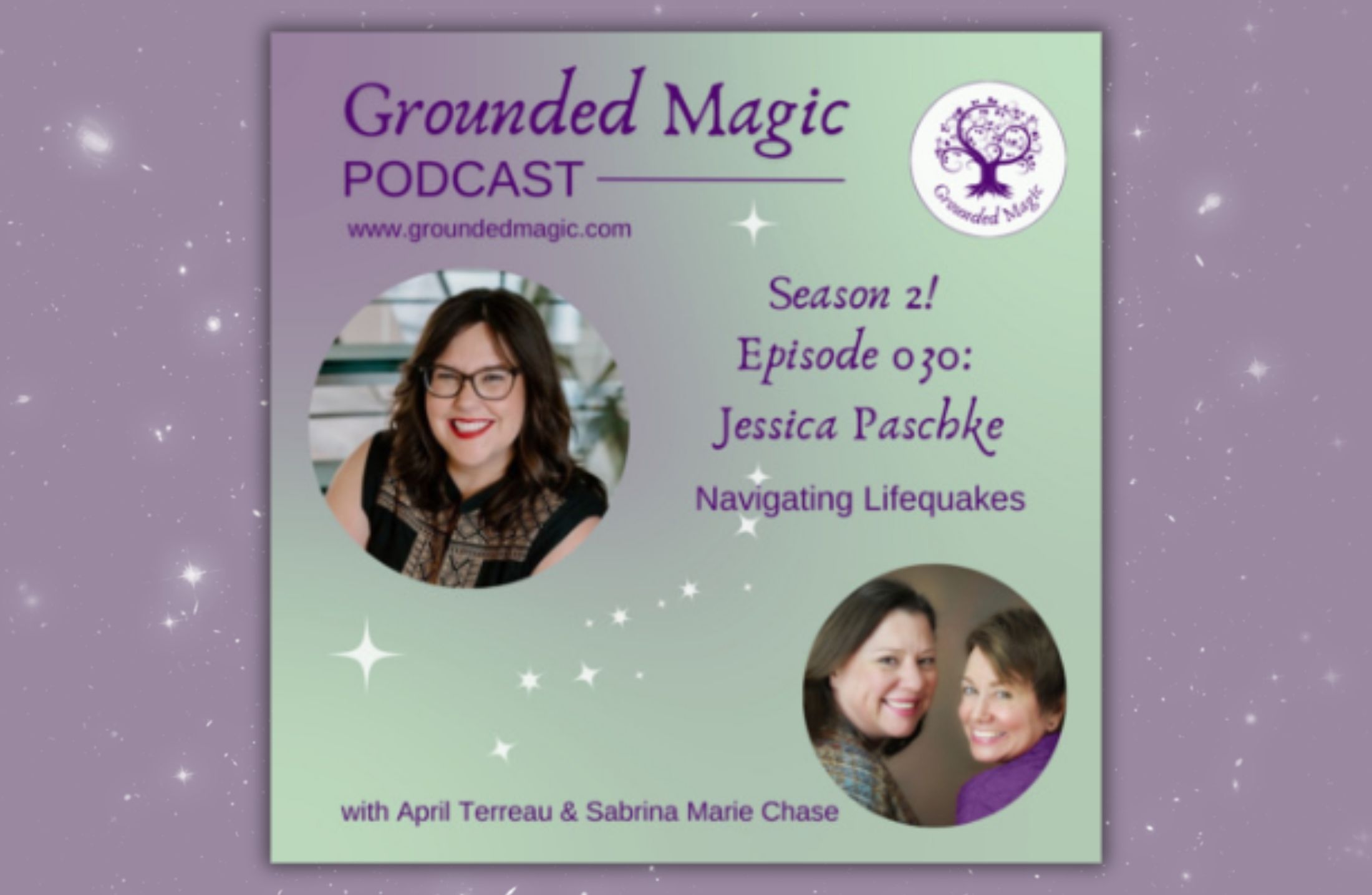
In the middle of our biggest lifequake yet — two days into an RV trip with four cats, a dog, and a teenager — I found myself sweating in an alcove, about to record a podcast interview with two complete strangers. Nothing about it felt like the right moment. And then it turned out to be exactly the right moment.
